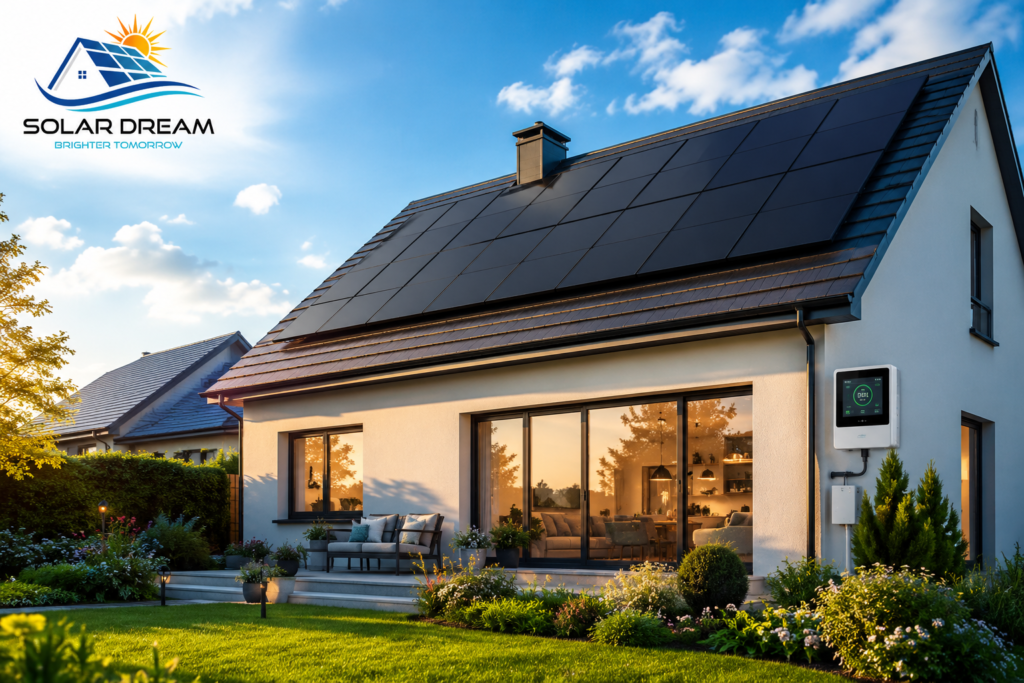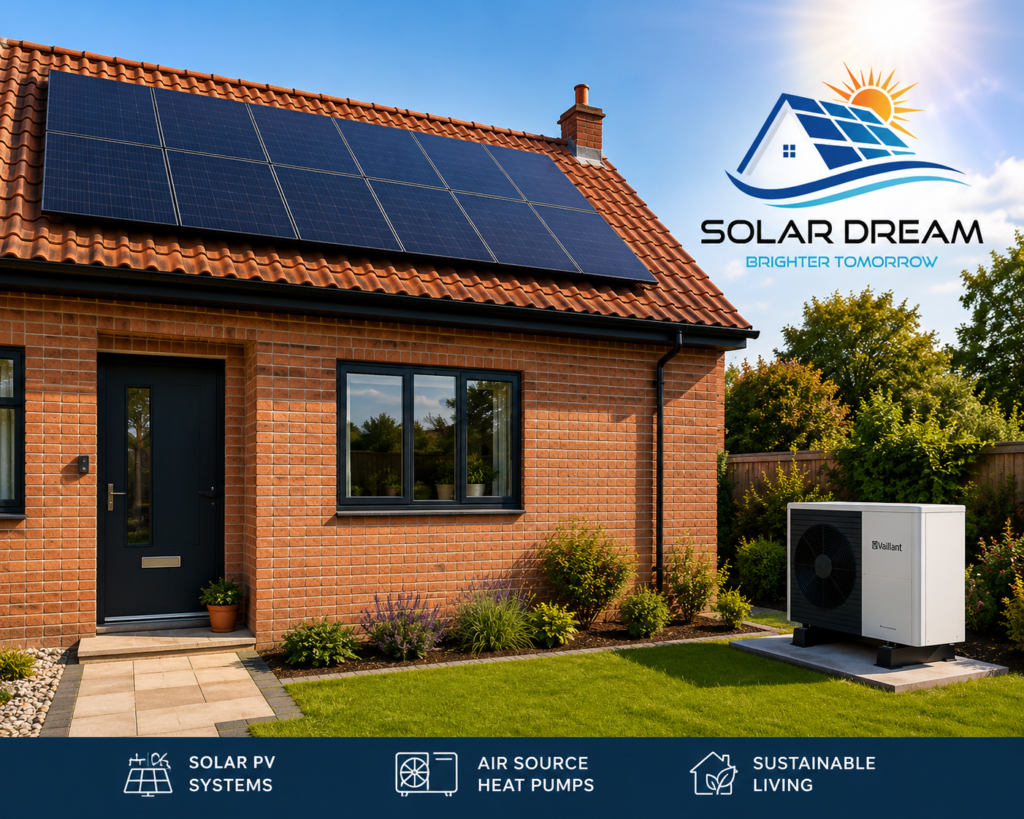
If you are serious about cutting your energy bills and reducing your carbon footprint, combining solar panels with a heat pump is one of the smartest investments you can make for your home. These two technologies work together beautifully. Solar panels generate free electricity from sunlight, and a heat pump uses that electricity to heat your home and hot water with remarkable efficiency. When paired together, they can dramatically reduce your reliance on the grid and fossil fuels, saving you hundreds of pounds every year.
At Solar Dream, we specialise in designing and installing integrated home energy systems across Norfolk, Suffolk, and East Anglia. As MCS, RECC, and NICEIC accredited installers, we have the expertise to deliver a seamless installation that maximises the performance of both your solar panels and your heat pump. Here is everything you need to know about combining these two technologies.
How Solar Panels and Heat Pumps Work Together
A heat pump works like a refrigerator in reverse. It extracts heat from the outside air, the ground, or a water source and transfers it into your home. This process requires electricity, but the heat pump produces three to four times more heat energy than the electrical energy it consumes. That is where solar panels come in. By powering your heat pump with solar electricity, you are effectively heating your home for free during daylight hours.
During the summer months, your solar panels will generate far more electricity than your heat pump needs, especially since heat demand is lower. That excess power can charge a battery storage system, run your household appliances, or be exported to the grid through the Smart Export Guarantee. In winter, when the heat pump works harder and solar generation is lower, the grid supplies the shortfall, but your solar panels still make a meaningful contribution, particularly on brighter days.
Adding a battery to the mix takes the savings even further. Your solar panels charge the battery during the day, and the battery powers the heat pump in the evening and overnight, giving you free heating around the clock. This combination is widely regarded as the gold standard for home energy independence.
Why This Combination Is Perfect for UK Homes
The UK climate is well suited to both solar panels and heat pumps. Modern solar panels work effectively on overcast days, generating useful electricity even when the sky is grey. Heat pumps, particularly air source heat pumps, are designed to operate efficiently in the UK’s relatively mild winter temperatures. East Anglia enjoys some of the best sunlight hours in the country, making it an ideal location for this pairing.
With the government’s Boiler Upgrade Scheme, you can get a grant of up to £7,500 towards the cost of a heat pump, making the upfront investment significantly more affordable. When you add the savings from solar panels, which can reduce your electricity bills by 50 to 70 per cent, the combined system pays for itself much faster than either technology on its own.
The Financial Benefits of Going Combined
Let us talk real numbers. A typical three-bedroom home in Norfolk might use around 12,000 kWh of gas per year for heating and hot water. Replacing a gas boiler with a heat pump running on solar electricity can save you between £500 and £900 annually on heating costs, depending on your current energy prices and the efficiency of your installation. Add the savings from solar panels covering your general electricity use, and the total annual saving can exceed £1,200.
With the Boiler Upgrade Scheme grant of £7,500 and the fact that solar panels and batteries are zero-rated for VAT until 2027, the combined installation cost is more accessible than ever. Many homeowners see a payback period of 8 to 12 years on the combined system, after which they enjoy virtually free heating and electricity for the 25-plus year lifespan of the equipment. Over a 20-year period, the total savings can easily exceed £20,000, making this one of the most financially rewarding home improvements you can make.
What Size Solar System Do You Need for a Heat Pump?
The size of your solar panel system depends on your heat pump’s electricity consumption and your household’s general electricity usage. A typical air source heat pump for a three-bedroom home uses around 3,000 to 4,500 kWh of electricity per year for heating and hot water. Adding your general household electricity use of another 3,000 kWh brings the total to around 6,000 to 7,500 kWh per year.
A solar panel system rated between 4 kWp and 6 kWp, depending on your roof size and orientation, can generate enough electricity to cover a significant portion of that demand. Our team at Solar Dream carries out a detailed site survey and uses professional design software to calculate the optimal system size for your specific home and heating requirements. We do not guess. We calculate based on real data and years of experience installing these systems across Norfolk and East Anglia.
Heat Pump Types That Work Best with Solar
Air source heat pumps are the most common choice for UK homes and pair excellently with solar panels. They are relatively straightforward to install, work efficiently in our climate, and are eligible for the Boiler Upgrade Scheme grant. Ground source heat pumps are even more efficient but require significant garden space for the ground loop and have a higher upfront cost, making them a less common pairing for typical suburban homes.
Solar thermal panels can also complement a heat pump system by providing hot water directly, but for most homes, a well-sized solar PV system with a heat pump is the more flexible and cost-effective solution. Solar PV generates electricity that can power the heat pump, run your appliances, charge an EV, and export to the grid. Solar thermal can only heat water. The flexibility of solar PV makes it the better partner for a modern heat pump system.
Installation Considerations for Norfolk and East Anglia Homes
Installing both solar panels and a heat pump requires careful planning and coordination. The heat pump needs an outdoor unit with good airflow, typically placed in the garden or against an external wall. The solar panels need unshaded roof space facing south, east, or west. Your home should be well insulated to get the best performance from the heat pump, as heat pumps operate most efficiently in homes that retain heat well. Loft insulation, cavity wall insulation, and double glazing all help your heat pump run more efficiently, which in turn reduces the amount of solar electricity it needs.
Solar Dream manages the entire process from start to finish. We survey your property, design the integrated system, handle all paperwork for the Boiler Upgrade Scheme grant and DNO notifications, and install both systems to the highest standards. We are MCS accredited for both solar and heat pump installation, giving you complete peace of mind that the work meets industry best practice and is eligible for all available grants and incentives.
Future-Proofing Your Home with Solar and a Heat Pump
The UK government has announced plans to phase out new gas boiler installations by 2035. Homes that rely on gas for heating will eventually need to switch to low-carbon alternatives. By installing solar panels and a heat pump now, you are future-proofing your home against rising energy prices and regulatory changes. You are also increasing your property value, as energy-efficient homes with low running costs are increasingly attractive to buyers.
If you also add battery storage and an EV charger, you create a truly self-sufficient home energy system. Your solar panels power your home and heat pump, your battery stores energy for the evening, and your EV charger uses any remaining clean electricity to fuel your car. It is the complete package, and Solar Dream can deliver it all. Many of our customers in Norfolk are now running their homes and cars almost entirely on solar energy, and the savings are transformational.
Get Your Combined System Quote from Solar Dream
Combining solar panels with a heat pump is a big decision, but it is one of the best investments you can make for your home and your future energy costs. At Solar Dream, we make the process simple and stress-free. We provide clear, upfront pricing, expert advice, and professional installation that you can rely on. Our team has decades of combined experience in solar and renewable heating, and we are proud to serve homeowners across Norfolk, Suffolk, and East Anglia.
Visit our solar PV page to learn more about our solar panel installation service, or contact us to book your free, no-obligation consultation. We also offer flexible finance options to help spread the cost. Call Solar Dream today and start your journey to a warmer, cheaper, greener home.
FAQs
Yes, solar panels can power a heat pump by generating electricity that the heat pump converts into heating and hot water. The two systems work together seamlessly, with solar panels providing free electricity to run the heat pump during daylight hours.
A typical three-bedroom home can save between £800 and £1,200 per year by combining solar panels with a heat pump, depending on energy usage, system size, and current energy prices.
Battery storage is not essential but is highly recommended. A battery stores excess solar electricity generated during the day to power the heat pump in the evening and overnight, maximising your savings and energy independence.
For a typical three-bedroom home with a heat pump, a solar PV system rated between 4 kWp and 6 kWp is usually sufficient. Solar Dream carries out a detailed survey to calculate the optimal size for your specific home.
Yes, the Boiler Upgrade Scheme provides a grant of up to £7,500 towards the cost of an air source heat pump, regardless of whether you are also installing solar panels. Solar Dream handles all grant paperwork.